

8 Tips to Get More Corporate Sponsors at Your Nonprofit
In the modern philanthropic landscape, reliance on traditional funding sources is increasingly insufficient to meet the demands of expanding missions. Whether it’s a local food bank seeking to expand its warehouse or an international environmental group launching a new conservation project, the private sector (via corporate sponsors) has become an indispensable partner.
However, many development offices struggle to bridge the gap between asking for a donation and building a long-term partnership. The difference lies in strategy, data infrastructure, and professional positioning. To compete for corporate dollars in a crowded market, nonprofits must transition from a reactive posture to a proactive, data-driven sponsorship model.
In this guide, we’ll walk you through eight tried-and-true tips for doing so. These include:
- Building a high-converting sponsorship portal
- Identifying your warmest leads with employment data
- Utilizing a comprehensive corporate giving database
- Demonstrating ROI effectively
- Structuring your sponsorship tiers
- Navigating the legal and ethical considerations
- Implementing strong stewardship and reporting practices
- Leveraging technology for long-term success
An optimized inbound funnel is essential for capturing interest at the moment it peaks. For nonprofits, this means moving beyond a simple contact page and developing a sophisticated ecosystem that identifies, attracts, and retains corporate allies.
Let’s get started!
1. The Digital Front Door: Building a High-Converting Sponsorship Portal
A dedicated sponsorship page serves as your digital pitch deck. It signals that your nonprofit is prepared for professional business collaborations even without your team having to make the first move.
A well-designed resource should offer the following benefits:
- Friction Reduction: Busy professionals want to know the who, what, and how within 30 seconds. A comprehensive sponsorships page provides immediate answers to their most pressing questions regarding audience reach and partnership tiers.
- Professional Branding: An optimized sponsorship portal differentiates your nonprofit from smaller, less organized organizations. It demonstrates that you have the administrative capacity to manage a high-level partnership.
- Lead Segmentation: Not all inquiries are equal. An integrated, structured contact form allows you to ask qualifying questions to determine budget range and specific areas of interest, such as event sponsorship, employee volunteerism, or cause marketing.
For the best results, use this online hub to highlight your collaborative value proposition. In other words, don’t just list your mission. Explain how a relationship with your cause solves a problem for the business. For example, you might demonstrate how a partnership helps a company achieve its sustainability goals or improve its local brand reputation.
From there, you’ll want to offer a menu of engagement opportunities that clearly list your products. This could include everything from sponsoring a high-profile gala to naming rights for a community garden.
2. The Power of Employment Data: Identifying Your Warmest Leads
Cold calling a CEO is rarely successful. However, reaching out to a business because a significant percentage of their employees already volunteer at your nonprofit is a warm lead. This is where employer data becomes your most valuable asset.
Did You Know? One of the most significant missed opportunities in fundraising is the failure to leverage the professional networks of your existing constituents. Your database is likely filled with donors, volunteers, and board members who work for companies with massive philanthropic budgets.
Consider these best practices for cleaning and utilizing your supporters’ employment insights:
- Supporter Employment Tracking: Many corporations offer matching gifts and volunteer grants specifically for organizations where their employees donate or commit a certain number of hours. For this reason, it’s a good idea to collect employment information from supporters as they engage with your organization, whether that’s through an online donation form or volunteer registration.
- Data Appending: Even after implementing supporter employment tracking practices, you’ll likely have some holes in your data. A data appending service can fill in these gaps, revealing that a large cluster of your donors works at a specific regional bank or tech firm.
- Segmented Communication: Once you have employment data for your supporters, use it to ensure your communications are as segmented and personalized as possible. This can include tailored workplace giving outreach as well as highlighting opportunities for donors and volunteers to advocate for sponsorship with their employers (or even just make an introduction!).
When you approach a company with data showing that their staff is already invested in your mission, the conversation shifts. You are no longer just a charity looking for a handout. You are a vital part of their employees’ lives and the company’s internal culture.
3. Utilizing a Comprehensive Corporate Database
To truly grow your sponsorship efforts, it’s important that you move beyond the local businesses on your street. Large-scale corporate philanthropy is often managed through complex foundations with specific giving pillars. With so many opportunities to choose from, it can be difficult to narrow down your best options.
To navigate this process, your development team needs access to a robust corporate giving database.
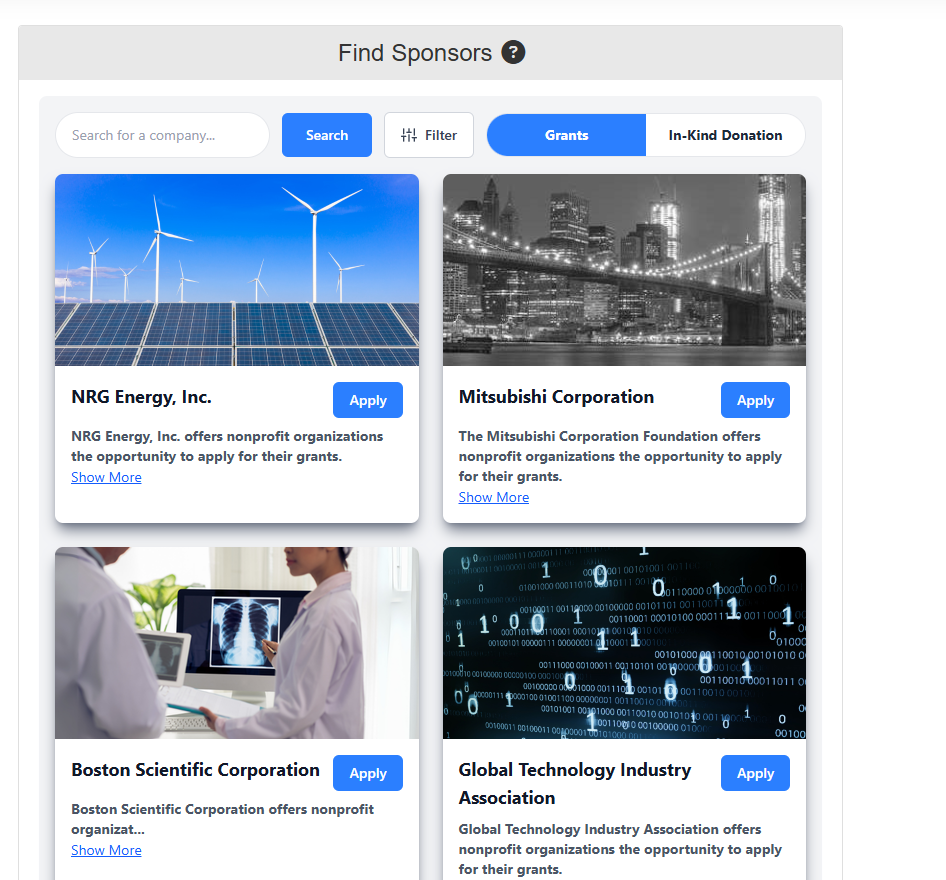
This kind of specialized database allows you to identify generous companies and filter based on their existing giving programs (such as corporate grants and in-kind donations). It will even provide easy access to submission links and eligibility requirements, making the application quick and simple for your team.
4. Demonstrating ROI: Speaking the Language of Business
In the corporate world, every dollar spent must be justified. While a donation is a philanthropic act, a sponsorship is often a marketing or HR expense. To secure these funds, you must demonstrate a strong Social Return on Investment for any partnership you propose.
This can take on a few forms.
Brand Visibility and Marketing
For many sponsors, the primary goal is brand alignment. They want their company to be associated with a prestigious or trusted local organization.
If this is the case, you’ll want to focus your partnership efforts on:
- Audience Metrics: Be prepared to share your reach. Provide numbers pertaining to how many people attend your events, the volume of monthly visitors your website receives, the extent of your email marketing list, and how many followers you have on social media.
- Co-Branding: Offer opportunities for ‘presented by’ status on major newsletters, podcasts, or community outreach programs. Any chance you have to share the partner’s logo can be a significant win!
Growing Employee Engagement
Companies are in a constant war for talent and are struggling with employee retention. The right sponsorships can help with this.
If your prospective partner is primarily seeking employee engagement opportunities, consider highlighting:
- Custom Volunteer Experiences: Offer sponsors exclusive, high-impact volunteer days that build team morale.
- Leadership Positions: Allow corporate executives to serve on your junior boards or advisory committees. This provides professional development for their staff while giving your nonprofit access to corporate expertise.
By framing your sponsorship opportunities around these tangible business benefits, you transform the conversation from a request for charity into a strategic investment. Regardless of what a specific company is looking for, your goal is to show that a partnership with your nonprofit provides a measurable advantage to their bottom line.
5. Structuring Your Sponsorship Tiers
Complexity is the enemy of the sale. To make it easy for a business to say yes, provide a clear, multi-tiered structure of sponsorship opportunities. This allows businesses of varying sizes to find an appropriate entry point that fits their budget.
Consider the following sample nonprofit sponsorship tiers:
| Tier | Focus | Typical Deliverables |
| Community Supporter | Local small businesses, like law firms or retail shops | Logo on the nonprofit website, mention in the annual report, and a window decal |
| Programmatic Partner | Regional banks, medical groups, or mid-sized corporations | Naming rights for a specific program, logo on event t-shirts, and social media spotlights |
| Strategic Visionary | National corporations or major foundations | Naming rights for facilities, seats on the board of directors, and primary branding on all channels |
While the above levels can serve as a solid baseline, remember that the most successful partnerships involve a degree of customization. By using this structure as a starting point for dialogue, you can negotiate specific deliverables that align precisely with a corporation’s unique CSR goals, ensuring that both your mission and their business objectives are fully supported.
6. Navigating the Legal and Ethical Considerations
Corporate sponsorships can come with unique challenges. For this reason, it’s essential to have a clear corporate gift policy in place before you begin active solicitation.
Protecting Organizational Integrity
The primary concern for any nonprofit is ensuring that a corporate partnership does not compromise the mission or independence. Keep these items in mind as you draft your sponsorship policy:
- Exclusivity Clauses: Be cautious about granting a sponsor exclusive rights that may prevent your organization from working with other partners in the future.
- Endorsement Limits: Ensure that a sponsorship does not imply that the nonprofit endorses the company’s products or services.
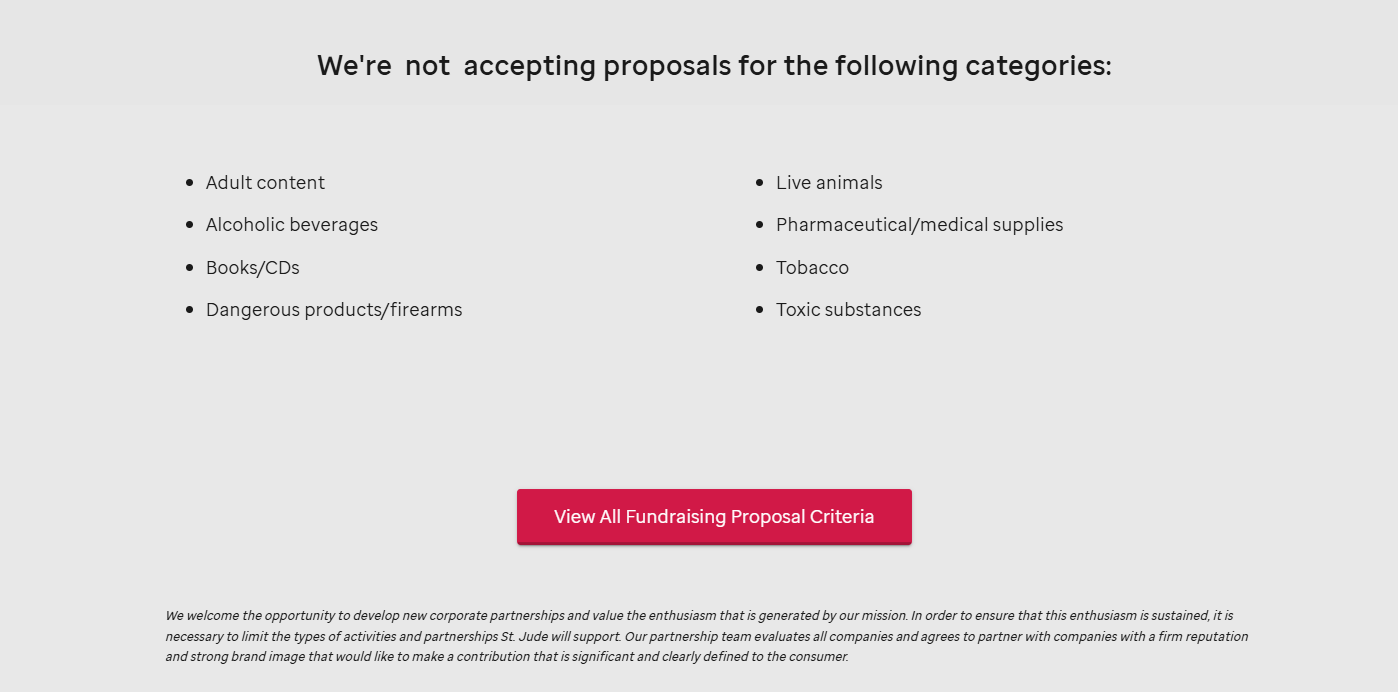
- Vetting Processes: Establish a dedicated committee to vet potential sponsors to ensure their corporate values align with your ethical standards. This might involve avoiding partnerships with companies in controversial industries.
Here’s an example from the St. Jude Children’s Hospital website:
Tax Exemptions and Unrelated Business Income Tax
For nonprofits seeking corporate partnerships, it’s important to distinguish between a qualified sponsorship payment and advertising income. After all, qualified sponsorship payments are generally tax-exempt, while advertising income may be subject to UBIT, or Unrelated Business Income Tax.
Take a look at the table below to explore the differences in greater depth:
| Feature | Corporate Sponsorship | Advertising |
|---|---|---|
| Primary Purpose | Public recognition of a donor’s generous support for the mission | Promoting a company’s products or services to induce a purchase |
| Language Used | Value-neutral identification of the partner | Qualitative or comparative language (e.g., “the best,” “fastest,” or “preferred”) |
| Visuals & Branding | Inclusion of the donor’s official name, logo, and slogan (if the slogan doesn’t promote a product) | Product displays, promotional slogans, or visuals that highlight specific merchandise |
| Price Information | Strictly prohibited; no mention of discounts, sales, or pricing | Often includes specific price points, percentage-off deals, or savings claims |
| Call to Action | None. Can list a website URL or phone number for contact purposes only | Contains clear calls to action (e.g., “Buy now,” “Stop by for a deal,” or “Call for a quote”) |
| Tax Treatment | Generally considered a “Qualified Sponsorship Payment” and is tax-exempt for the nonprofit | May be considered “Unrelated Business Income” (UBI) and subject to tax (UBIT) |
Quick Note: Always consult a nonprofit tax professional to ensure your sponsorship agreements are properly structured.
7. The Importance of Stewardship and Reporting
The sale does not end when the check is signed. That is actually when the partnership begins.
As most fundraisers know, the most costly part of the process is acquiring a new donor. Meanwhile, the most efficient way to grow your revenue is to retain the ones you already have. The same is true for corporate sponsors! To keep them supporting your cause long into the future, it’s important that you invest time and effort in smart stewardship and reporting practices.
The Impact Report
Companies need data to show their stakeholders how their money was used. For this reason, an annual corporate impact report is essential. This report should include several key components.
- Qualitative Stories: Include photos of the mission in action or testimonials from those your nonprofit serves.
- Quantitative Data: Provide specific stats, such as how a sponsorship allowed the organization to serve 5,000 additional meals.
- Marketing Metrics: Report on how many times a logo was viewed through your digital channels over the course of the year.
A Culture of Gratitude
Go beyond the automated receipt. Have those who benefit from your organization’s work write thank-you notes. Invite corporate representatives to see the programs they fund in action. When a sponsor feels like a hero, they’ll be much more likely to maintain or increase their commitment the following year.
8. Leveraging Technology for Long-Term Success
Modern sponsorship management has evolved beyond simple contact lists. To compete for high-level corporate investments, your organization needs a centralized command center that empowers your development team to shift from administrative work to proactive relationship-building.
A robust Constituent Relationship Management system optimized for corporate giving and sponsor relations serves as the institutional memory for your nonprofit, ensuring that, when a key staff member leaves, the history and nuances of your corporate partnerships remain.
Here are a few key features to keep an eye out for if you’re looking to upgrade your CRM:
- Lifecycle Tracking: Managing a corporate sponsorship is a multi-step process that can take months from the initial inquiry to the signed contract. A good CRM lets you visualize this journey in a sales-style pipeline.
- Centralized Asset and Deliverable Management: By checking off these deliverables in the system, you create a digital trail of accountability that makes end-of-year impact reporting seamless and accurate.
- Corporate Database Integration: Pull in real-time data on corporate sponsorship policies and grant cycles through ready-built integrations with tools like Double the Donation.
- Smart Relationship Mapping: The ability to link individual donors and volunteers to their corporate employers. This is key for workplace giving initiatives like matching gifts and volunteer grants!
Rather than struggling to remember which logo goes on which banner or when a contract is up for renewal, your team (powered by the right donor database) can focus on the high-touch interactions that actually move the needle. This level of organization not only boosts your internal efficiency but also projects an image of professional excellence to your partners.
Summary and Next Steps
Securing corporate sponsorships for a nonprofit requires a shift in mindset. You’re not asking for a favor. You are offering a high-value opportunity for a business to invest in their community, their brand, and their employees.
By building a professional inbound gateway, leveraging the power of employment data, and utilizing a comprehensive corporate database, you can transform your development office into a sophisticated sponsorship engine.
Corporate philanthropy is evolving, and companies are increasingly seeking nonprofits that can serve as professional, strategic partners. By implementing these data-driven strategies, you ensure that your organization stands out in a competitive market and secures the funding necessary to achieve your mission.